Photo by Alex Dudar on Unsplash
- This article aims to provide a comprehensive overview of essential products and services offered by Google Cloud Platform (GCP).
Table of Contents:
- About
- Why Cloud Computing?
- GCP Brand Pyramid
- GCP Financial Health
- GCP Tech Deployment
- GCP Computing Infrastructure
- The History of GCP
- Cloud Cybersecurity
- Secure LDAP
- Kubernetes Engine
- Cloud SQL
- ML Portfolio
- Dialogflow
- Data Studio
- Generative AI
- IoT Architecture
- Google Analytics
- GCP Agility Culture
- Summary
- Explore More
About
- GCP is a portfolio of cloud computing services that grew around the initial Google App Engine framework for hosting web applications from Google’s data centers.
- Apart from the different management tools which are available upon GCP, the company has also included a lot of cloud functionalities and features like cloud storage, data analytics, developer options, and advanced ML/AI. The wide range of optimization and other advantages is what makes the GCP so popular.
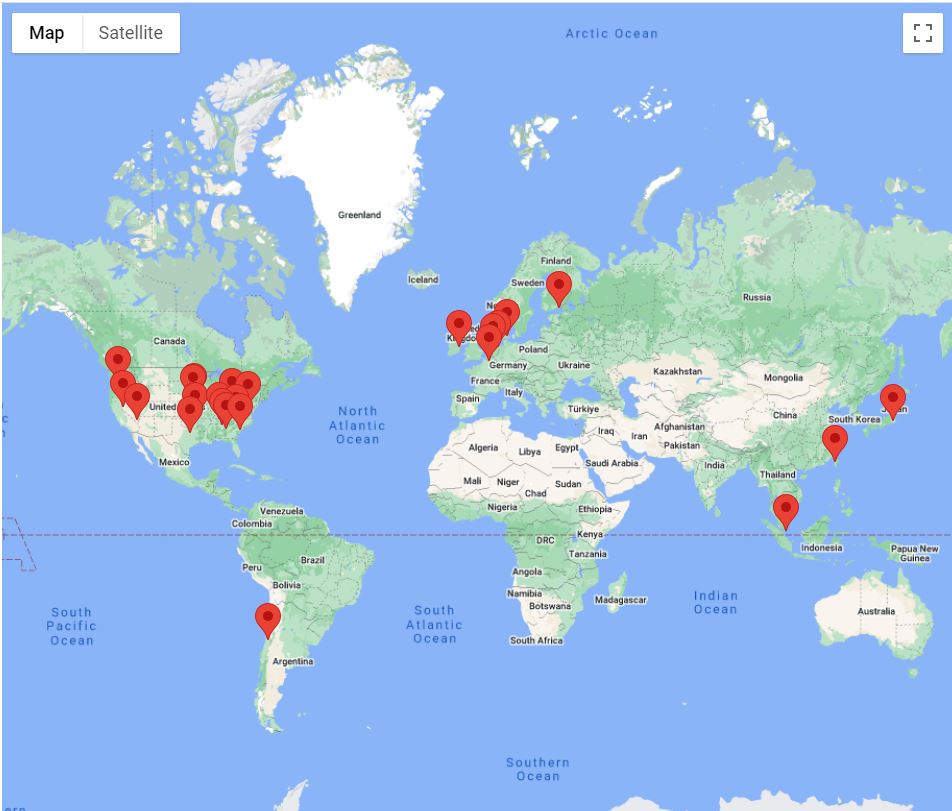
Discover GCP data center locations:

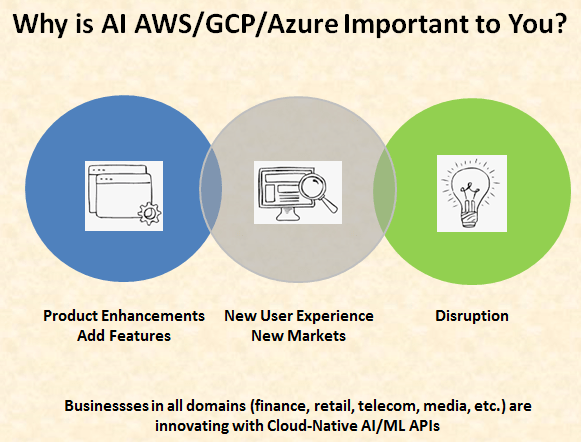
Why Cloud Computing?

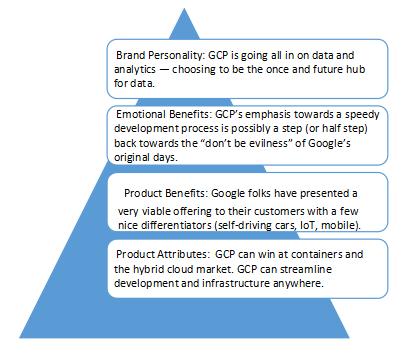
GCP Brand Pyramid
Read more here.
GCP Financial Health
- GCP is regarded as the third biggest cloud provider in terms of revenue behind AWS in first place and Microsoft Azure in second.
- Google said its cloud group has turned profitable on an operating basis after showing losses for more than three years.
- The segment generated $191 million in operating income on $7.45 billion in revenue in the first quarter, according to Alphabet’s earnings statement. In the year-ago quarter, the unit reported a $706 million loss on $5.82 billion in revenue.
- See below a high overall correlation of GOOG, MSFT and AMZN stock prices in 2023. That makes sense given the long run performance of these names, which now puts them at the top of the market cap leaderboard.

GCP Tech Deployment
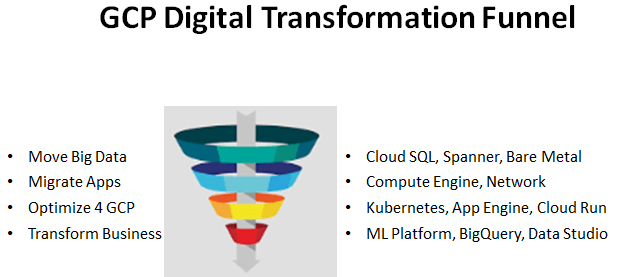
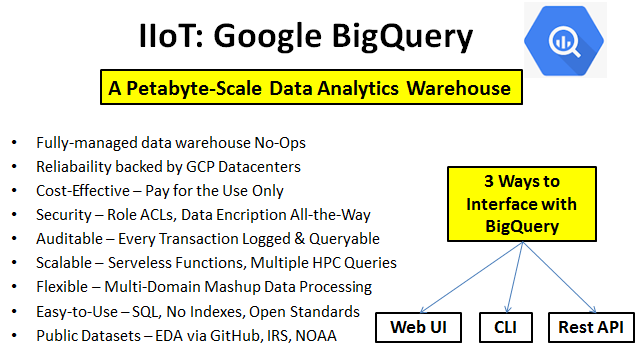
Example:
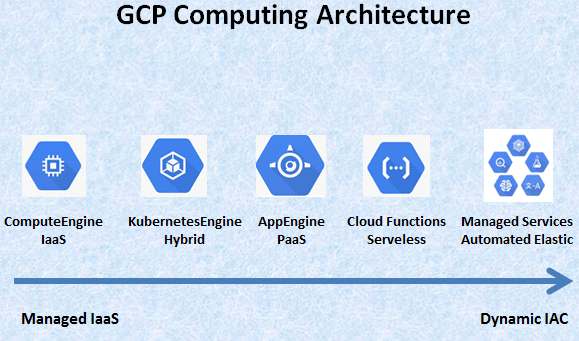
GCP Computing Infrastructure
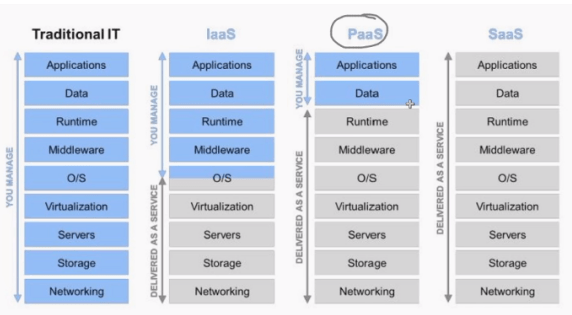
- Cloud infrastructure: IaaS, PaaS, and SaaS vs traditional IT.
The History of GCP
- Amazon launched its cloud computing service in 2006. 2 years later, Google got in the game with its own cloud service. In April 2008, Google announced a preview release of App Engine, a developer tool that allowed users to run their web applications on Google infrastructure.
- In November 2011, Google pulled App Engine out of preview mode and dubbed it an official, fully supported Google product. After the release of this first product, Google has added many more services under the GCP umbrella. It has become one of the top public cloud vendors in the world.
Cloud Cybersecurity
- Like all major cloud vendors, GCP practices cloud security under the shared responsibility model, which requires both cloud provider and customer to implement security measures. GCP is required to secure its infrastructure, while cloud users are expected to secure their cloud resources, workloads and data.
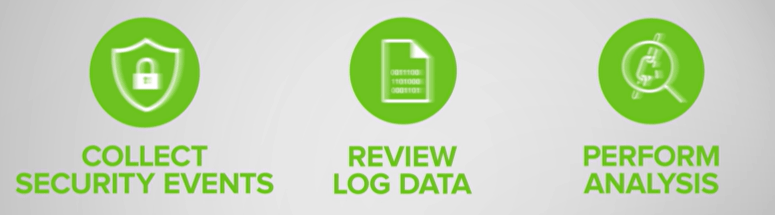
- Three pillars of cloud security:
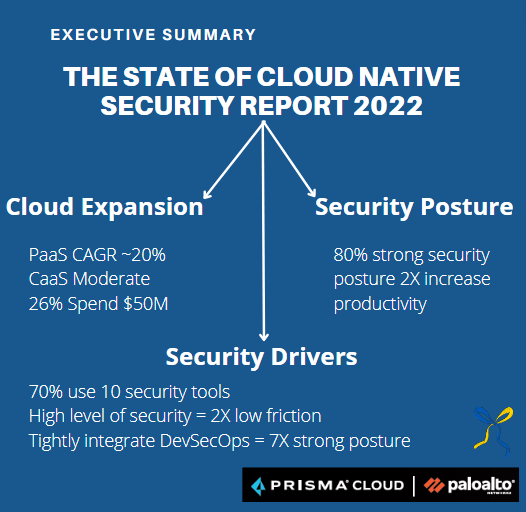
- 7 elements to baseline your cyber peace on GCP and well beyond

Secure LDAP
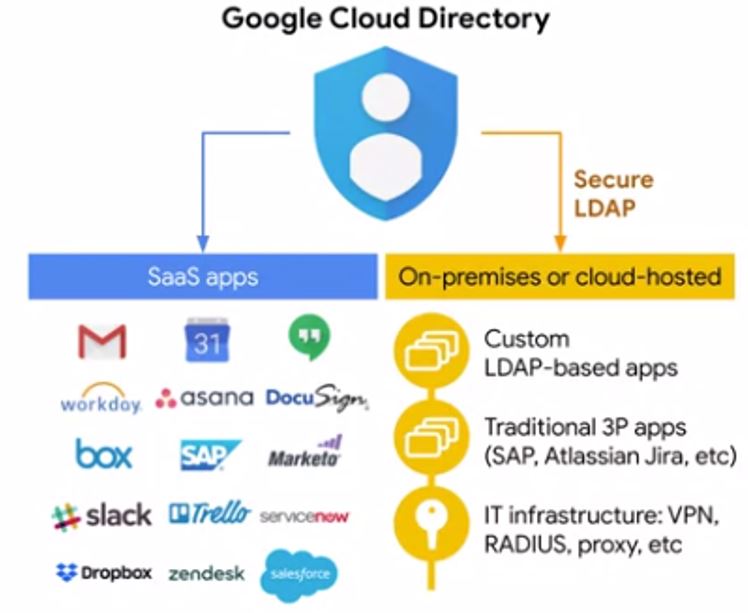
- The Secure LDAP service provides a simple and secure way to connect your LDAP-based applications and services to Cloud Identity or Google Workspace.
- Using Secure LDAP, you can use Cloud Directory as a cloud-based LDAP server for authentication, authorization, and directory lookups. The LDAP-based apps (for example, Atlassian Jira) and IT infrastructure (for example, VPN servers) that you connect to the Secure LDAP service can be on-premise or in infrastructure-as-a-service platforms such as Google Compute Engine, AWS, or Azure.

Kubernetes Engine
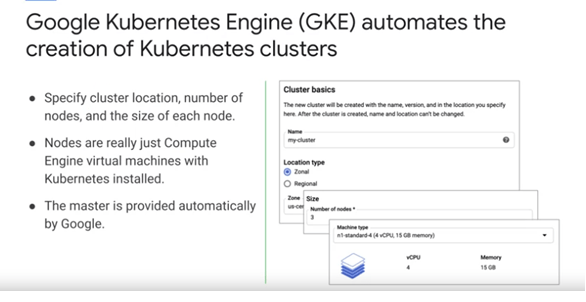
- Google Kubernetes Engine (GKE) is the most scalable and fully automated Kubernetes service.
- How it works: A GKE cluster has a control plane and machines called nodes. Nodes run the services supporting the containers that make up your workload. The control plane decides what runs on those nodes, including scheduling and scaling. Autopilot mode manages this complexity; you simply deploy and run your apps!
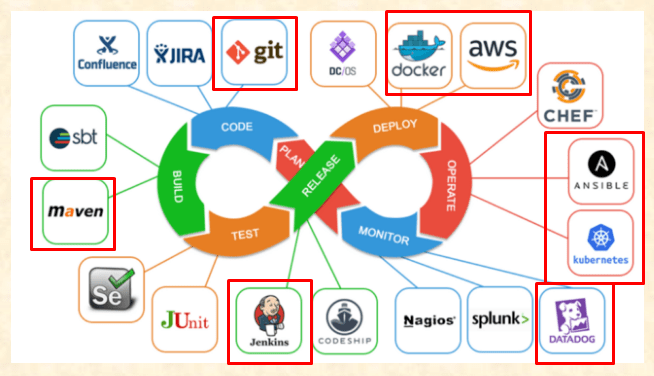
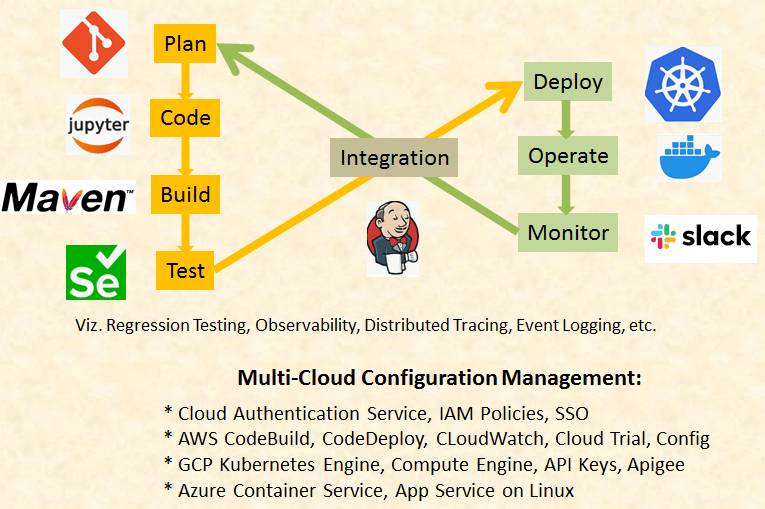
DevOps Configuration Management:
Basic DevOps Loop
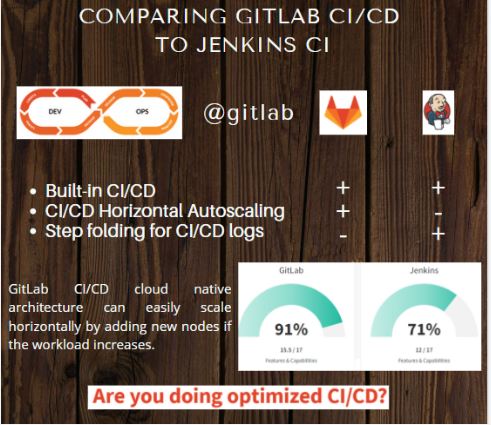
- GitLab is the most comprehensive AI-powered DevSecOps Platform.
- GitLab Case Study | Google Cloud: GCP and Rackspace Technology, enabled by Intel technologies, are helping GitLab solve for velocity, enabling customers to build and release their software products faster.
Cloud SQL
- Cloud SQL is fully managed relational database service for MySQL, PostgreSQL, and SQL Server with rich extension collections, configuration flags, and developer ecosystems.
- Cloud SQL is a cloud database service or database-as-a-service (DBaaS). Data in the database is stored and processed in the cloud, on the infrastructure of a cloud service provider, and the access is provided from the level of the GCP console or the command line.
- The transfer speed through the Google network reaches up to 10 Tbs, which enables increasing efficiency while maintaining the same price for the service. This means that Cloud SQL, as one of the GCP services, is a serverless, scalable service ensuring high availability and performance.
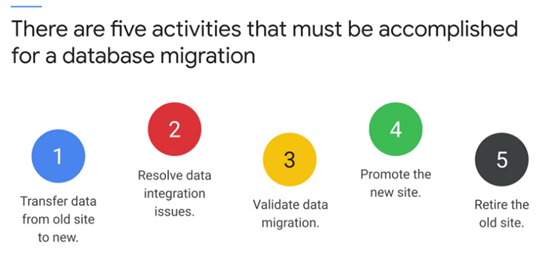
- What about DB migration?
ML Portfolio
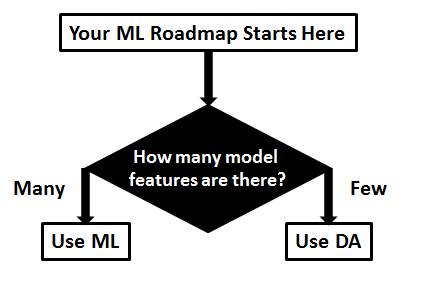
- ML-Data Analytics (DA) trade-off:
- Backward-looking or forward-looking APIs?
- Predictive analytics is forward-looking
- Dashboards and reports are backward-looking

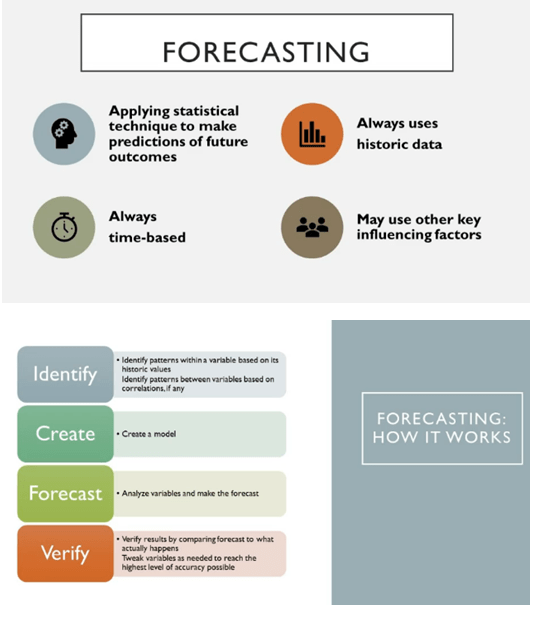
Step 3 is linked to Forecasting:
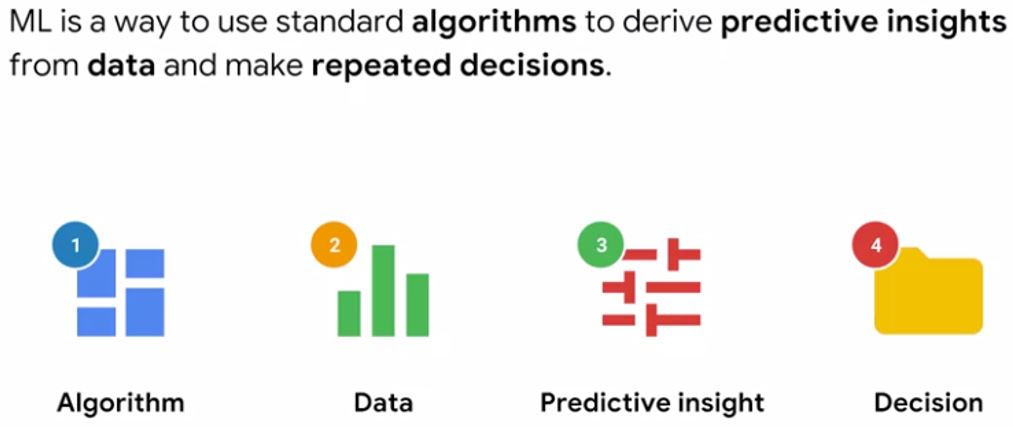
Examples of standard use-cases: detect a pattern in an image, predict the future of a time series, and understand or transcribe human speech or text.
ML business application in healthcare:

Let’s discuss a few out-of-the-box GCP AI and ML services:
- Cloud AutoML makes the power of machine learning available to you even if you have limited knowledge of machine learning.
- Text-to-Speech-to-Text is very useful for use cases like text bots, voice bots, transcribe multimedia content, customer service, voice generation, etc.
- Google Dialogflow is a development suite for creating chatbots and conversational IVR for websites, mobile applications, popular messaging platforms, and IoT devices. This tool is powered by Google’s machine learning and natural language processing algorithms to recognize a user’s intent, understand user sentiment, and extract prebuilt entities such as time, date, and numbers.
- Google AI Platform is a one-stop solution for machine learning developers and data scientists to take their ML projects from experiment to production and deployment. AI Platform integrated with several easy-to-use tools like BigQuery and Data Labeling Service to help you build and run your own machine learning applications quickly.
- AI Hub is Google Cloud’s hosted repository of plug-and-play AI components, end-to-end AI pipelines, and out-of-the-box ML algorithms. You can discover best AI content, pre-trained models, and a wide range of open datasets to further modify them for your custom needs. You can share your ML pipelines, notebooks, models, and other AI content via AI Hub.
- Tensorflow Enterprise provides enterprise-grade support, performance, and managed services for your ML & AI workloads directly by the Tensorflow creators.
Dialogflow
- Building conversational experiences with Dialogflow – any voice or chat interface that relies on NLP for interacting with users.
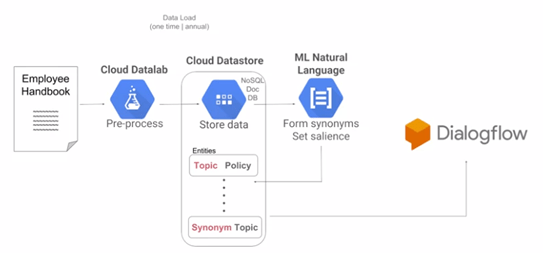
HR Use-Case Example: Employee Handbook
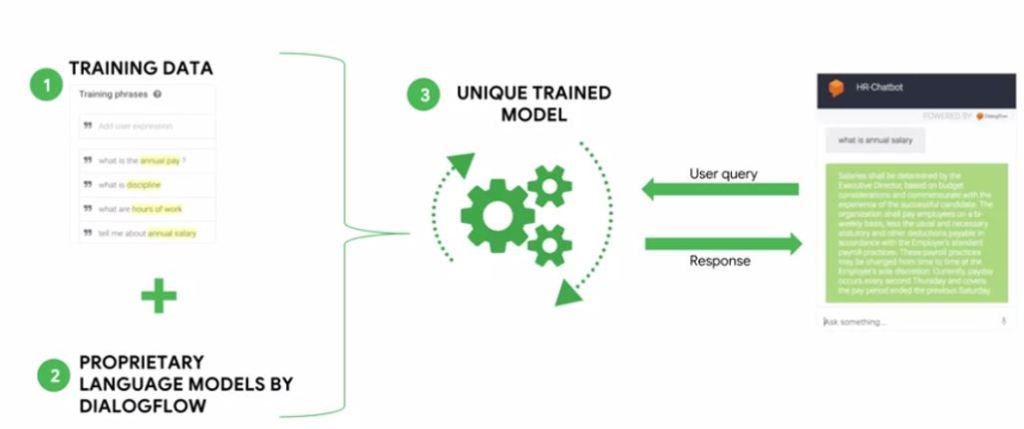
- How does it work?
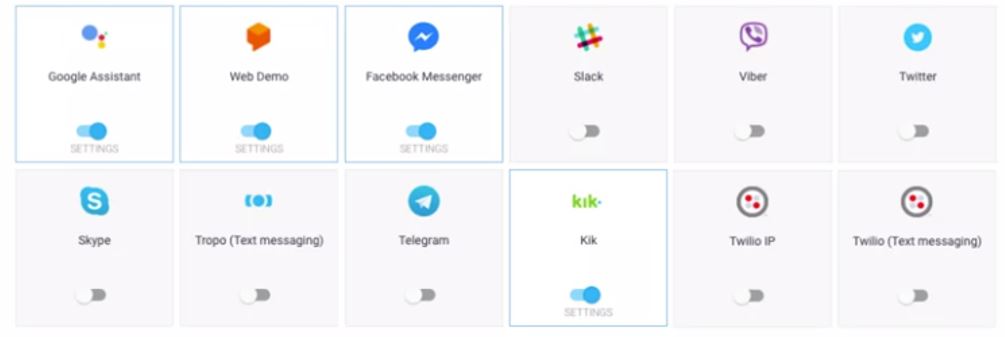
- One-click integrations with most major platforms
- Taking your chatbot to production in terms of automation, branding, and security.
Data Studio
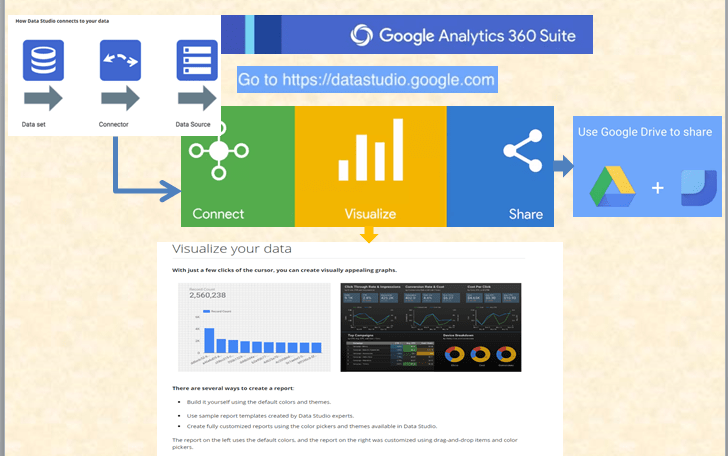
- 3 pillars of GCP Data Studio

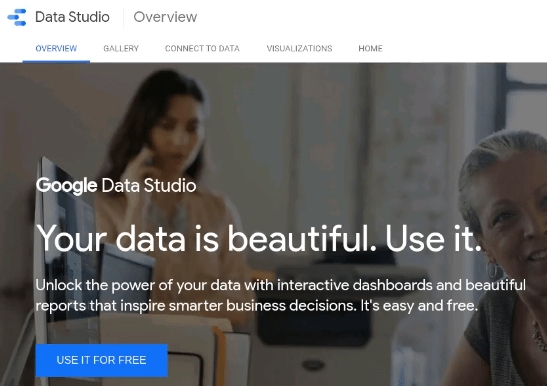
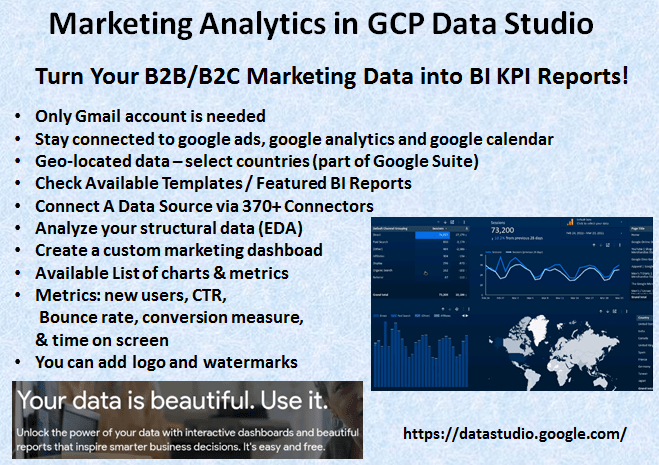
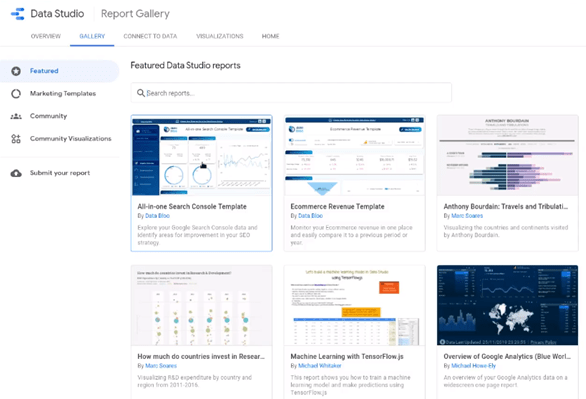
- Data Studio (DS) Is Now a GCP Service.
- DS is a self-service business intelligence (BI) and data visualization offering.
- Indeed, Data Studio now meets SOC 1, 2, and 3 compliance standards – alongside PCI DSS. These relate to information system security, internal auditing, and controls.
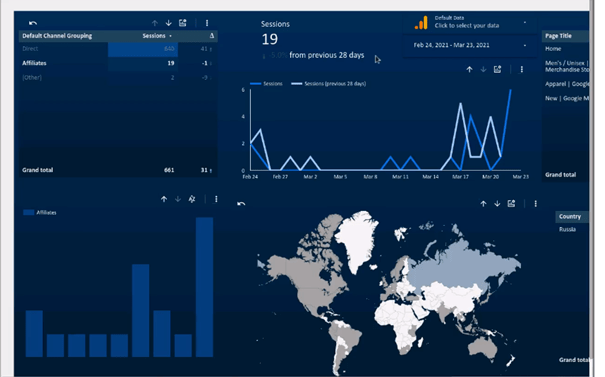
- This case example demonstrates how to use Google Data Studio to visualize data stored in Google BigQuery.
Generative AI
- GCP brings generative AI to real-world experiences.
- With Vertex AI, you can interact with, customize, and embed foundation models into your applications, no ML expertise required. Access foundation models on Model Garden, tune models via a simple UI on Generative AI Studio, or use models directly in a data science notebook.
- Read more here.
- Follow the GenAI course by GCP.
IoT Architecture
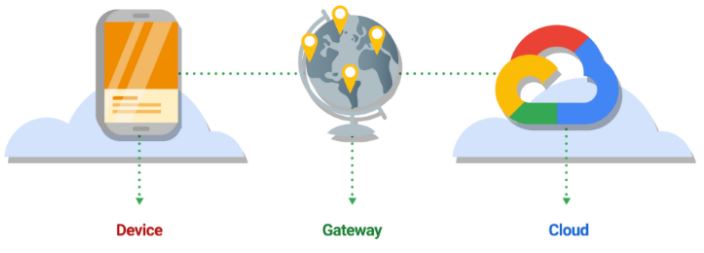
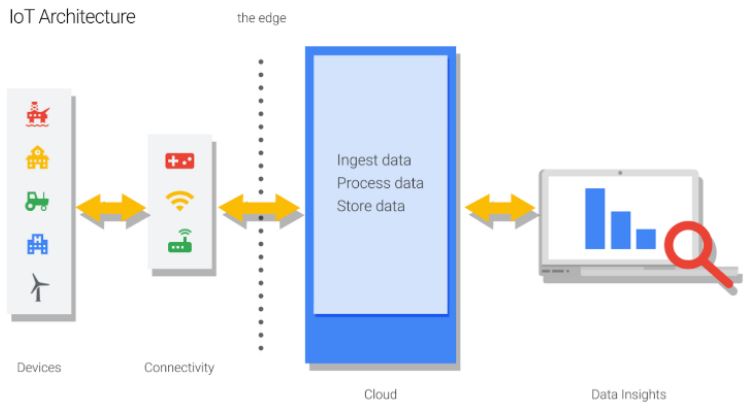
- Three DGC pillars of GCP IoT: Devices, Gateway, and Cloud.

- GCP IoT Architecture: devices, connectivity, the edge, Cloud, and data insights.
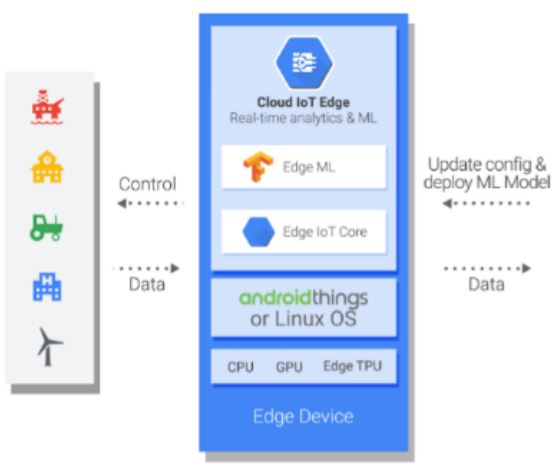
- GCP Cloud IoT Edge
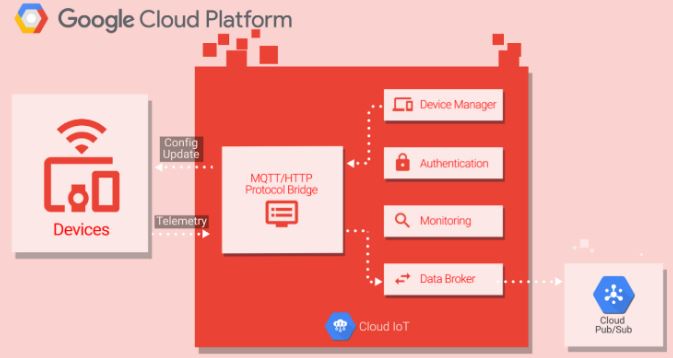
- GCP Cloud IoT and Cloud Pub/Sub.
- Connect Google IoT Core via MQTT.
- GCP IoT DataOps API Sequence: Ingest, Process and Analyze Real-Time Data.
- One of the critical services provided by Google in the field of IoT is the Google Cloud IoT Core. Google Cloud IoT Core is a fully managed service which allows us to securely and easily connect, manage and ingest the data from the internet connected devices. Apart from this, it also allows other Google Cloud Platform services to collect, process, manage and visualize the IoT data in real time.

The reference architecture shows how messages from devices are brokered as events into the Cloud Pub/Sub events stream manager through IoT Core, which acts as a gateway between devices and cloud services. The Cloud Pub/Sub message triggers a cloud function to run on it. Cloud Dataflow (a managed service) helps transform the incoming streams. It can be used to filter incoming data that are not needed in the final storage. Messages stay in Cloud Pub/Sub temporarily, and it stores the data for seven days. Dataflow shuttles the data to the storage and analytics section (Cloud Bigtable, BigQuery, and AI Platform). Google also offers data visualization tools, such as Datalab and DataStudio.
- GCP IoT Use Case: Real-Time Temperature Monitoring

- Read more about GCP IoT services and solutions here.
Google Analytics
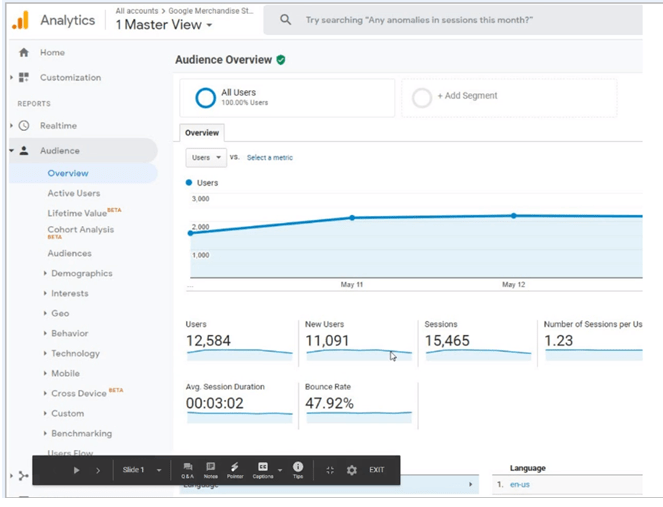
- Now Google Analytics lets you check IoT Data.
- Many analytics tools, such as WebTrends Stream and Adobe Analytics, are incorporating external data into their reports.
- Users can specify optional parameters, each a match to familiar Google Analytics reporting features such as E-commerce, Enhance E-Commerce and Event Tracking.
GCP Agility Culture
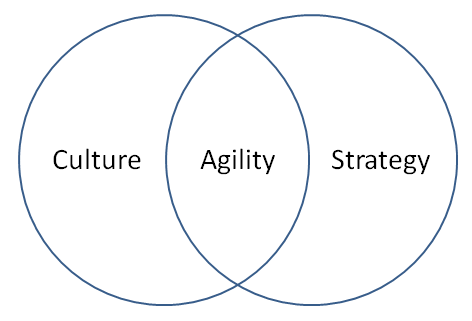
- Doing vs being: GCP offers great lessons on building an Agile corporate culture and mindset all-the-way. That’s why GCP is so popular among customers!
Summary
- Managing billions of IoT devices requires a set of dedicated cloud services.
- There are 3 cloud platforms: AWS, Azure and GCP. Hardware manufacturers like Siemens, Bosch, GE, Schneider build their IoT platforms but they use cloud provider services. There are also IT software companies like Hitachi, IBM, PTC, SAP, Software AG which have strong IoT platforms offerings.
- The IoT cloud: Microsoft Azure vs. AWS vs. Google Cloud
The three large hyperscalers collectively hold ~80% of the global IoT public cloud market. Hyperscalers offer a large number of services in the public cloud that form the backbone of many IoT initiatives.
- IoT software platforms revenue is expected to grow from 2 billion in 2019 to more than 5 billion in 2023 (IDC Research).
- The market for the IoT is very fragmented and new platforms are appearing every year.
- Google historically focused on the serverless computing, ML and container orchestration via Kubernetes
- Google expertise AI and ML capabilities like translate, search, and security can bring a competitive advantage over the other two players.
- Core Technology: Learning as a Service, LaaS (aka MLaaS), is at the heart of GCP IoT portfolio

- GCP supports the following key IoT components:
| Components | Products |
| Devices | Edge TPU, Google ASIC chip |
| Edge Gateway | Cloud IoT Edge |
| IoT Hub | Cloud IoT Core |
| Device management | Device manager |
| Event processing | Cloud Pub/Sub + Dataflow |
| Analytics | Dataflow |
| Data visualization dashboard | Cloud DataLab |
| BI | Cloud Data Studio |
- Industrial use cases pose additional requirements for the IoT Platform selection with a focus on scalability, security and usability.
Explore More
- Cloud-Native Tech Status Update Q3 2022
- EdTech for All: Free/Paid IoT Courses ’22
- Cybersecurity Summer 2022 Round-Up
- Newsletter
- Frontiers
- A Roadmap from Data Science to BI via ML
- Cloud-Native Tech Autumn 2022 Fair


Make a one-time donation
Make a monthly donation
Make a yearly donation
Choose an amount
Or enter a custom amount
Your contribution is appreciated.
Your contribution is appreciated.
Your contribution is appreciated.
DonateDonate monthlyDonate yearly Our Blogs
Leave a comment